
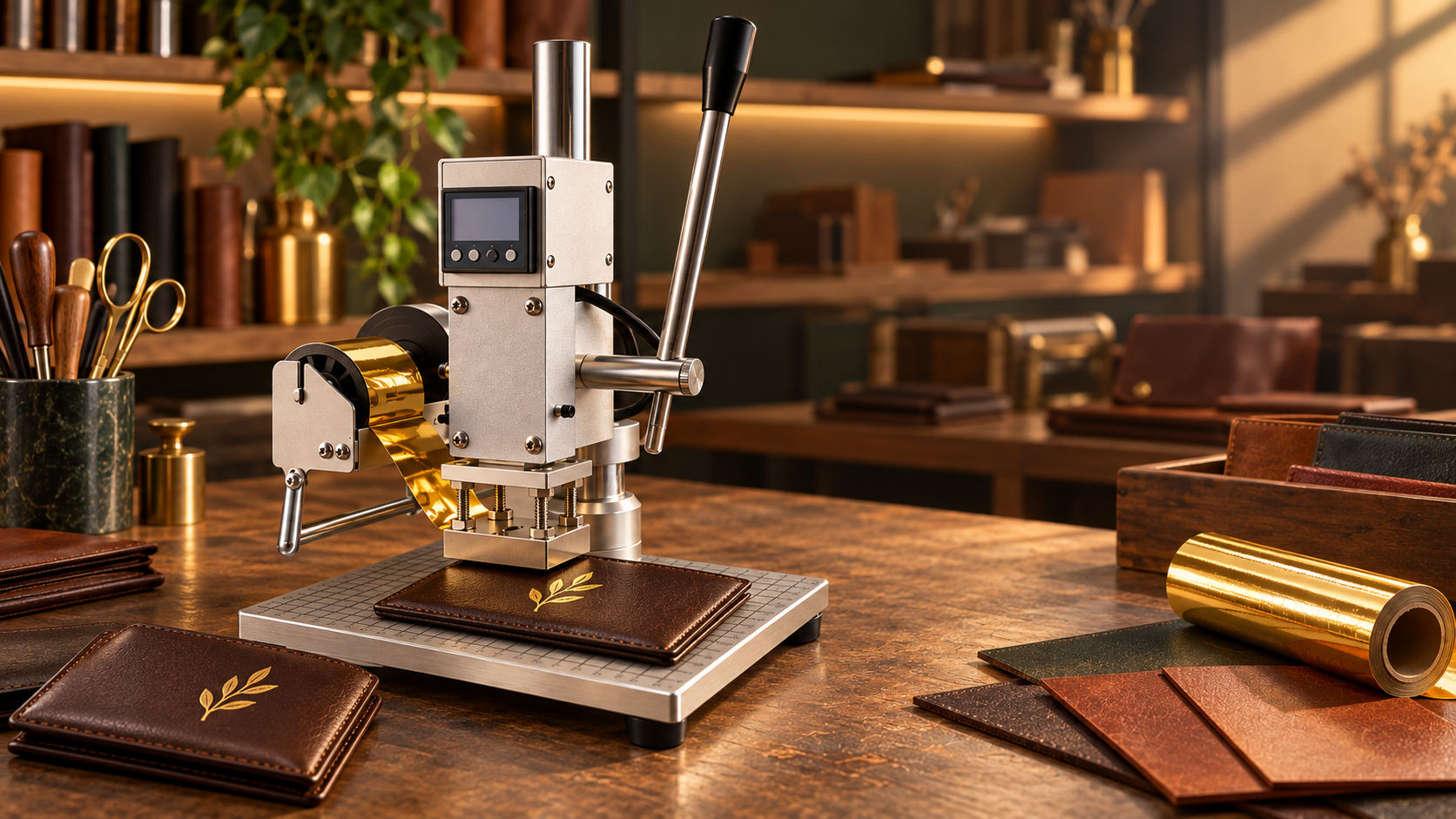
A manual hot stamping machine gives the operator direct control over every impression. A pneumatic machine uses compressed air to apply pressure more consistently. Both can produce sharp foil logos—the better option is the one that matches how your workshop actually works.
Manual vs pneumatic at a glance
| Factor | Manual press | Pneumatic press |
|---|---|---|
| Best fit | Samples, custom work and small batches | Repeat orders and higher-volume runs |
| Pressure | Controlled by the operator | Air-driven and easier to repeat |
| Setup | Simple; no air supply required | Needs a compressor and air preparation |
| Investment | Lower entry cost | Higher system and maintenance cost |
| Workflow | Flexible when products change often | Faster, less tiring repeated cycles |
Choose a manual machine when flexibility matters
Manual presses suit leather studios, packaging sample rooms and small workshops that change logos, dies or product shapes frequently. The operator can feel the contact and adjust lever force for each item. They are quiet, compact and easy to install because only electrical power is needed for heating.
The trade-off is operator variation. Long runs can cause fatigue, and pressure may differ between users. Good fixtures, clear work instructions and digital temperature control improve repeatability.
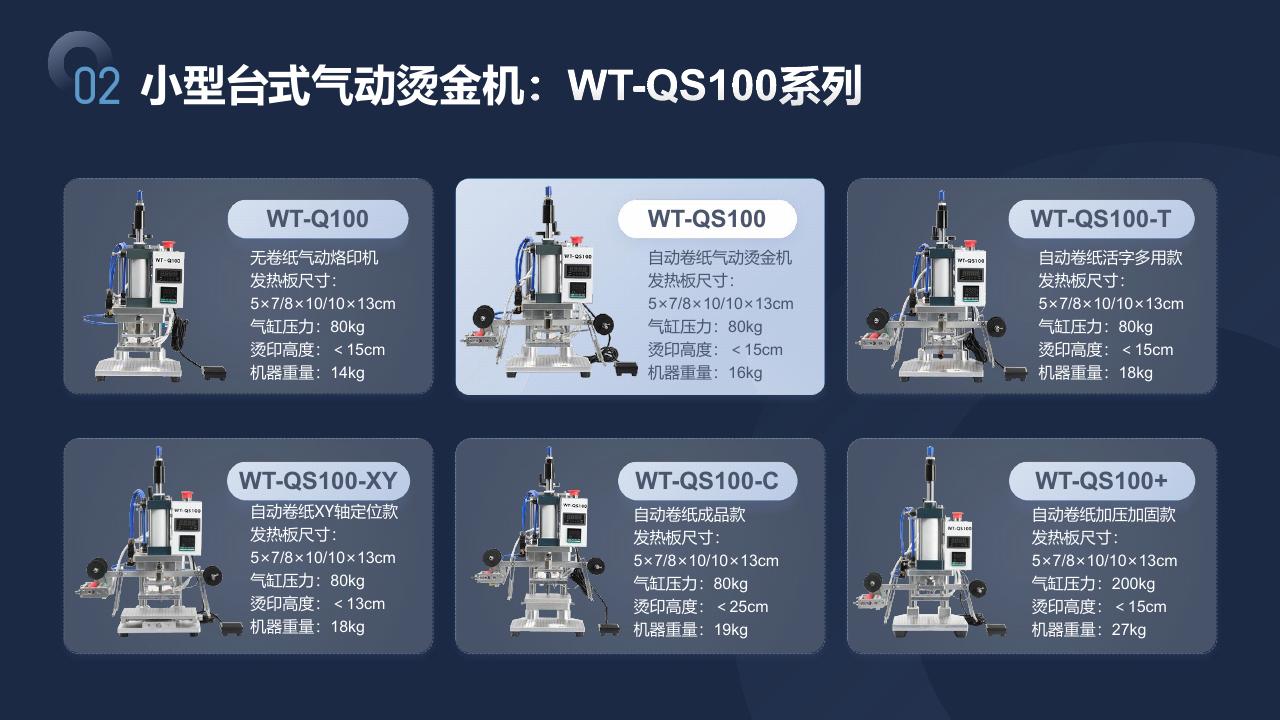
Choose a pneumatic machine when repetition matters
A pneumatic hot stamping machine is a stronger fit when the same job repeats throughout the day. Regulated air pressure makes each cycle more consistent and reduces physical effort. It can improve productivity for packaging, labels and other standardized products.
Plan for the complete system: compressor capacity, clean dry air, safe controls, suitable fixtures and enough floor space. A pneumatic press does not automatically fix poor results—foil compatibility, temperature, dwell time, die quality and product support still matter.
Ask these four questions before buying
✓ Are most orders custom or repeated?
✓ How many impressions must one operator complete?
✓ Is consistent pressure more important than tactile control?
✓ Do you have space, power and clean compressed air?
Choose manual for variety, low setup complexity and small batches. Choose pneumatic for repeatability, reduced operator effort and sustained production. Test the real material and logo before finalizing either machine.
Which WTONG setup fits your workshop?
For compact manual work, compare the WT-90DS, flexible WT-90TSL and finished-product-oriented WT-90X. If your priority is repeat output, send us your material, logo size, product dimensions and target daily quantity so we can match pneumatic pressure, platen and fixture to the job.
QUICK QUESTIONS
Before you choose
Is a pneumatic press always better for quality?
No. It improves pressure repeatability, but clean results still depend on correct temperature, dwell time, foil, die and product support.
Can a manual machine handle professional production?
Yes. For varied products and moderate batches, a well-fixtured manual press can deliver professional, repeatable results with lower setup cost.