
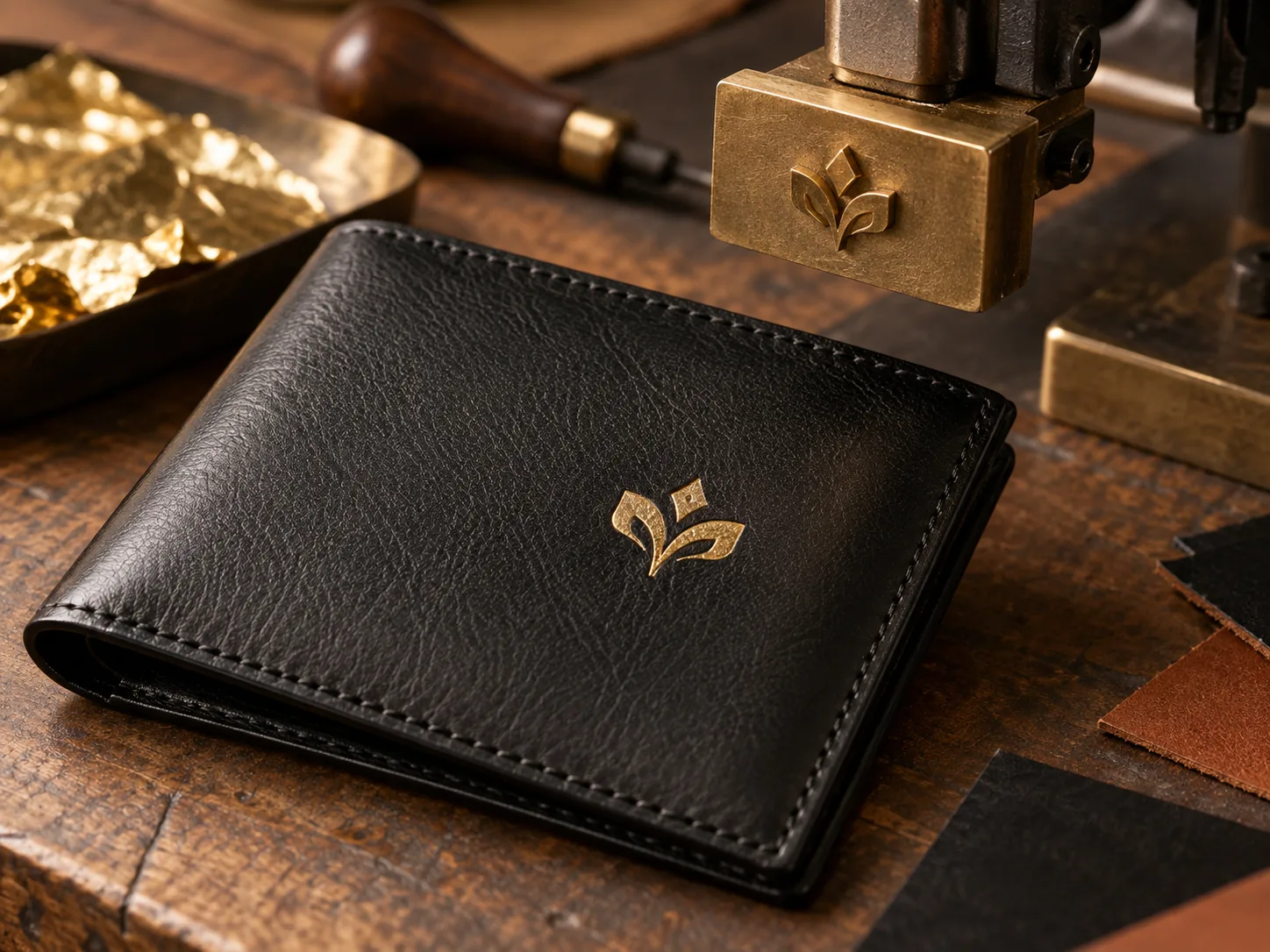
Gold foil stamping and blind debossing both use a heated die and pressure. Gold foil places a metallic layer between the die and the leather; blind debossing presses the design directly into the surface with no color at all. Because the tooling and press are shared, many workshops run both finishes — and the decision is per product line, not forever.
The result is not simply “bright versus dark.” Each finish communicates a different brand character, behaves differently under wear, and carries different production risks. This guide compares them honestly, including where each one fails.
Gold foil vs blind debossing at a glance
| Factor | Gold foil stamping | Blind debossing |
|---|---|---|
| Appearance | Reflective, high contrast and easy to notice | Subtle, recessed and tactile |
| Brand style | Luxury, decorative or gift-oriented | Minimal, natural or heritage-inspired |
| Best surface | Smooth, consistent leather that accepts the selected foil | Leather that compresses cleanly and holds an impression |
| Wear behavior | Depends on foil compatibility, adhesion and friction | Cannot peel, but depth can relax on soft or stretchy leather |
| Production focus | Foil, temperature, pressure and dwell time | Die depth, heat, pressure and leather support |
| Consumables | Requires suitable stamping foil | No foil required |
| Failure mode | Patchy transfer or color rubbing off | Impression too shallow, or surface darkened by excess heat |
Choose gold foil when visibility matters
Gold foil works well for wallets, notebook covers, gift packaging and premium accessories where the logo should catch the eye. It creates clear contrast on black, brown and other dark leathers and helps a small mark feel deliberate and decorative. On pale or natural leathers, metallic gold reads more subtly — matte black or white pigment foil often communicates better on light surfaces than gold does.
The trade is process sensitivity. The foil must match the leather coating and finish: oils, waxes, heavy grain and soft surfaces all reduce transfer quality, and paper-grade foil fails on leather predictably. Production discipline matters more than on blind work — start at the lowest practical temperature, balance pressure and dwell time, and keep a settings log per die-and-material pair. If the foil looks patchy or lifts after cooling, use our foil adhesion troubleshooting guide — most adhesion failures trace to foil grade or dwell time, not to the press.
One further strength worth noting: foil lets you change brand color without changing tooling. Gold for the gift line, black pigment for the minimal line — same die, different roll. That flexibility is hard to get any other way.
Choose blind debossing for a quieter, tactile finish
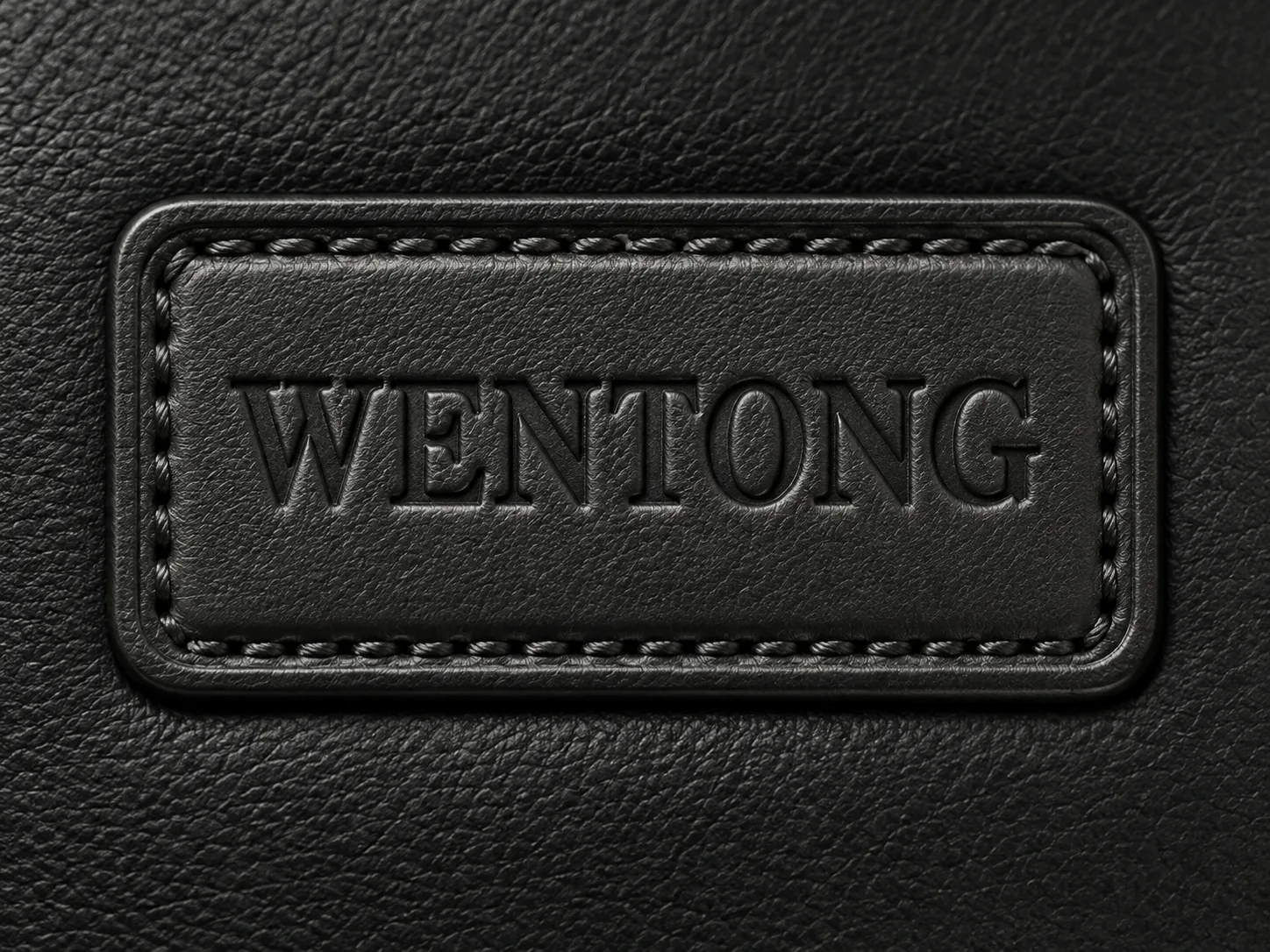
Blind debossing is a strong choice for minimalist brands, natural leather goods and products handled frequently. It preserves the leather color and relies on shadow and depth instead of metallic shine — the kind of mark a customer feels with a thumb before they see it. For heritage-style and maker-brand products, that tactility often says “quality” more convincingly than shine.
Its risks are different from foil's. Impression depth is everything: a well-made custom copper die with the right relief keeps fine lines and letter edges clean, while a shallow or worn die produces a mark that reads as a smudge. Leather firmness matters too — firm vegetable-tanned leather holds a defined impression for the life of the product, while very soft or elastic leather rebounds over time. Excess heat or pressure darkens the surface or flattens the surrounding grain, so blind work still demands a tested, recorded setting despite needing no consumables.
Cost and durability, honestly compared
Consumables: blind debossing removes foil cost entirely, which makes it the cheaper finish for very small runs. For repeated production the foil cost per piece is small — a single roll yields thousands of impressions — so material cost rarely decides the question. The shared cost either way is the custom die, and it serves both finishes.
Durability: blind debossing cannot peel because there is no layer to fail; its only wear mode is depth relaxing on soft or stretchy leather. Correctly applied leather-grade foil bonds into the finish layer and survives normal handling, but friction points — wallet edges, strap contact areas — test adhesion daily. Durability, in practice, depends more on process quality than on which finish you chose: a foil pressed at the wrong setting fails fast, and a blind mark pressed too shallow fails quietly. Test with flex-and-rub cycles on production material, not workshop samples.
Hybrid strategies that work in practice
The strongest brands rarely choose one and stop. Common combinations we see:
✓ Foil logo outside, blind interior branding — visible mark where customers look, quiet detail where they discover it.
✓ Foil for gift SKUs, blind for everyday SKUs — same die, two brand voices, zero extra tooling.
✓ Blind date codes and foil logos — personalization in blind, branding in foil, both on one press.
Because both finishes share the die-making process and the press, adding a second finish later is a settings decision, not a capital purchase — one more reason to choose a machine that logs settings precisely.
Approve a sample before production
✓ Stamp both finishes with the same logo size for a fair comparison.
✓ Check fine lines, corners and small text after the leather cools.
✓ Flex and rub the sample to evaluate foil adhesion and impression recovery.
✓ Leave one sample in daylight for a week and compare color stability.
✓ Record temperature, dwell time, pressure and foil code for repeat orders.
Choose gold foil when the logo must be immediately visible. Choose blind debossing when you want the leather itself to remain the visual focus. For uncertain materials, make both samples and compare them under normal use — on a product, in a pocket, under shop lighting — not only on the bench.
Which setup should you use?
A temperature-controlled manual press such as the WT-90DS can produce both finishes by changing the tooling and process. For gold foil, pair the machine with a compatible hot stamping foil. For setup guidance, see how to hot stamp a logo on leather — the settings logic applies to blind work with slightly more pressure and less heat.
QUICK QUESTIONS
Before you choose
Can the same die be used for gold foil and blind debossing?
Often, yes. Both finishes use a heated die and pressure. However, the ideal edge profile and impression depth may differ, so test the die on your actual leather before approving production.
Is blind debossing more durable than gold foil?
It cannot peel because no colored layer is applied, but impression depth may soften on flexible leather. A compatible foil applied correctly also provides strong service life — process quality matters more than the finish itself.
Which finish is cheaper for small batches?
Blind debossing, since it needs no foil. For volume production, foil cost per piece is small and often justified by branding impact. The die is a shared cost either way.
Does gold foil work on light leather?
Less convincingly. On pale or natural leathers, matte black or white pigment foil usually reads better than metallic gold.
Can I combine both finishes on one product?
Yes — foil logo outside, blind detail inside is a common pattern, and both run on the same press and die process.